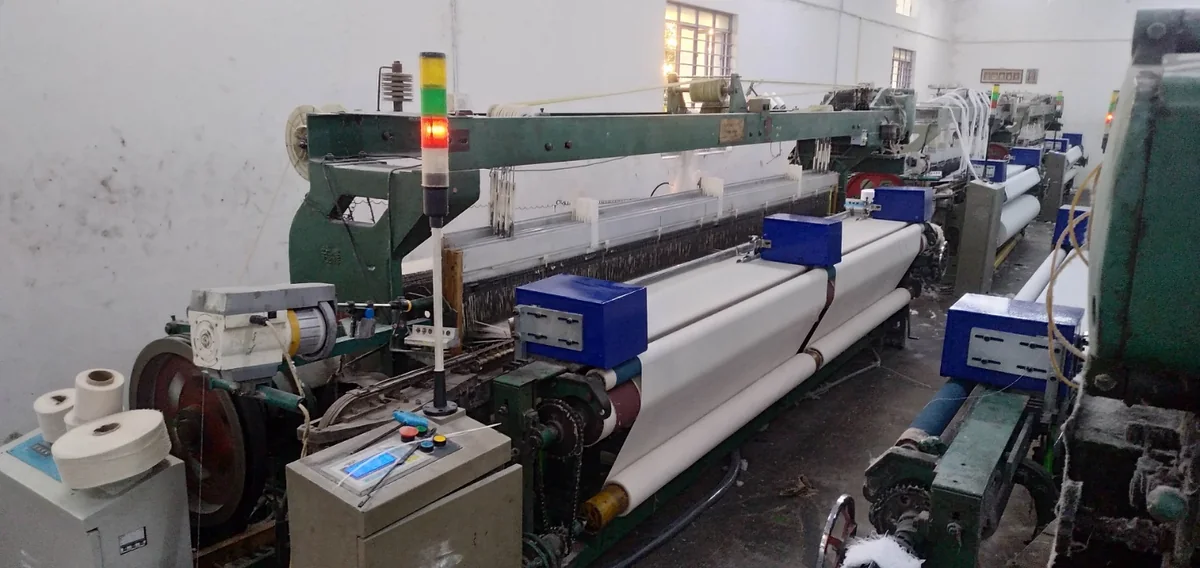
India weaves on 24 lakh looms built for 1950s technology.
The fix has always been the same: buy a shuttle-less loom for the price of a small house.
Almost no weaver can. So the looms stay as they are, and so do the families that run them.
RETRO RAPIER™ takes the other route. We are engineering
a shuttle-less weaving system that fits the cast-iron frame a mill already owns — rapier weft
insertion, closed-loop warp tension, digital pick control and a patented tuck-in device.
Keep the frame. Replace everything that limits it.
Grant-supported R&DInnovation Voucher Programme, via NIFT TEA
The problem we build for
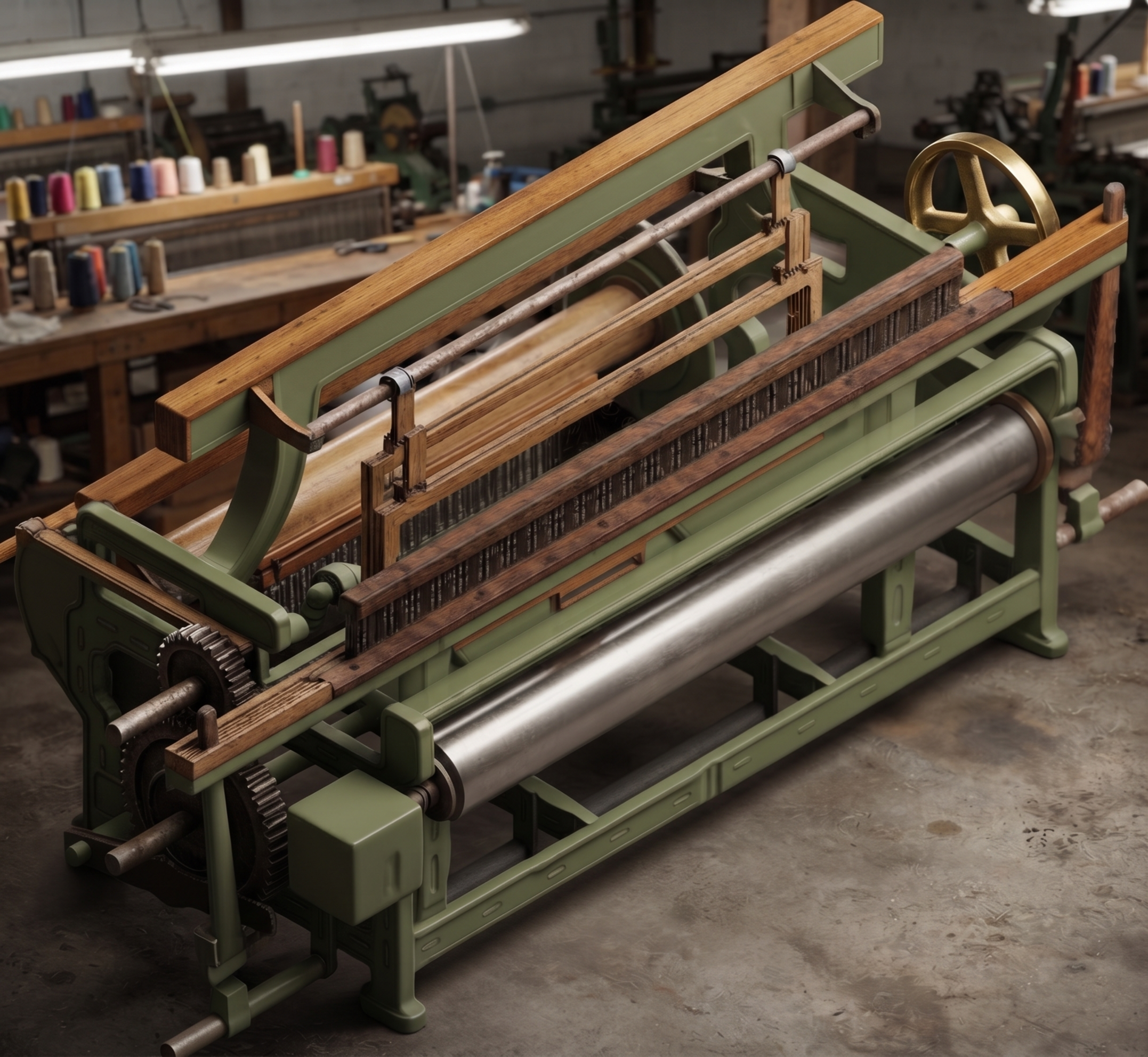
The world's largest loom fleet, running seventy-year-old machinery.
India has more installed power looms than any country on earth. Over 24 lakh of them still pick
weft with a flying shuttle — a mechanism that has barely changed since the 1950s. Behind those
machines are millions of MSME weavers and family units in rural and semi-urban India.
They are not short of ambition. They are short of an upgrade they can afford.
Shuttle picking is loud, slow and a real safety hazard on the shop floor.
Pirn winding adds an entire preparatory process, and the labour to run it.
Negative let-off lets warp tension drift as the beam empties, so fabric quality drifts with it.
Wheel take-up means changing gears by hand every time the pick density changes.
A new shuttle-less loom costs several times what a weaver's entire shed is worth.
Why this has not been solved
Everyone agrees the looms should be modernised. Nobody built the way to do it.
Central and state governments run subsidy schemes for power loom modernisation. Demand is there.
What is missing is the machine itself — a proven, affordable, Indian-made retrofit that turns an
existing loom into a modern one. That gap is the whole reason this company exists.
01
Subsidies with nothing to buy
Modernisation schemes are funded and active, but there is no indigenous retrofit platform for them to fund.
02
Skilled weavers are disappearing
Fewer people will run a shuttle loom each year. Automation stops being optional and becomes survival.
03
Imported kits do not fit
They are expensive, hard to service, and designed for looms that are not the ones Indian sheds actually run.
04
Scrapping the frame is waste
A cast-iron loom frame lasts decades. Melting it down to buy a new one is the least sustainable option on the table.
Our approach
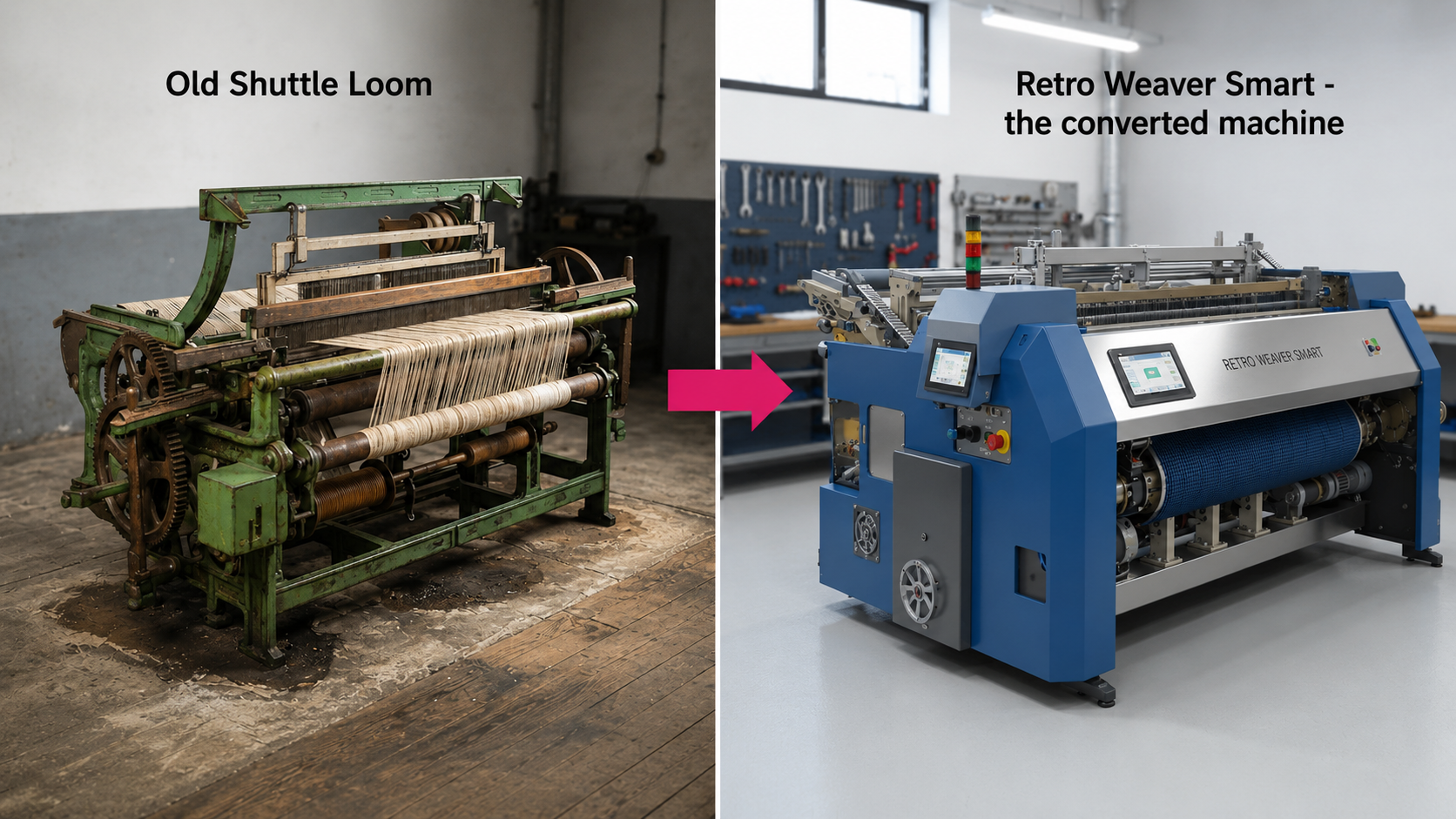
Keep the frame. Re-engineer the machine.
The frame is the heaviest, most expensive and most carbon-intensive part of a loom — and the part
that has not needed to change in seventy years. Leave it in place and the cost of modernisation
collapses. That single decision is what we are designing around: a target of roughly
one-fourth the cost of a new shuttle-less loom.
Conventional power loom frame→RETRO RAPIER™ smart weaving machine
Our engineering
Six subsystems. One intelligent loom.
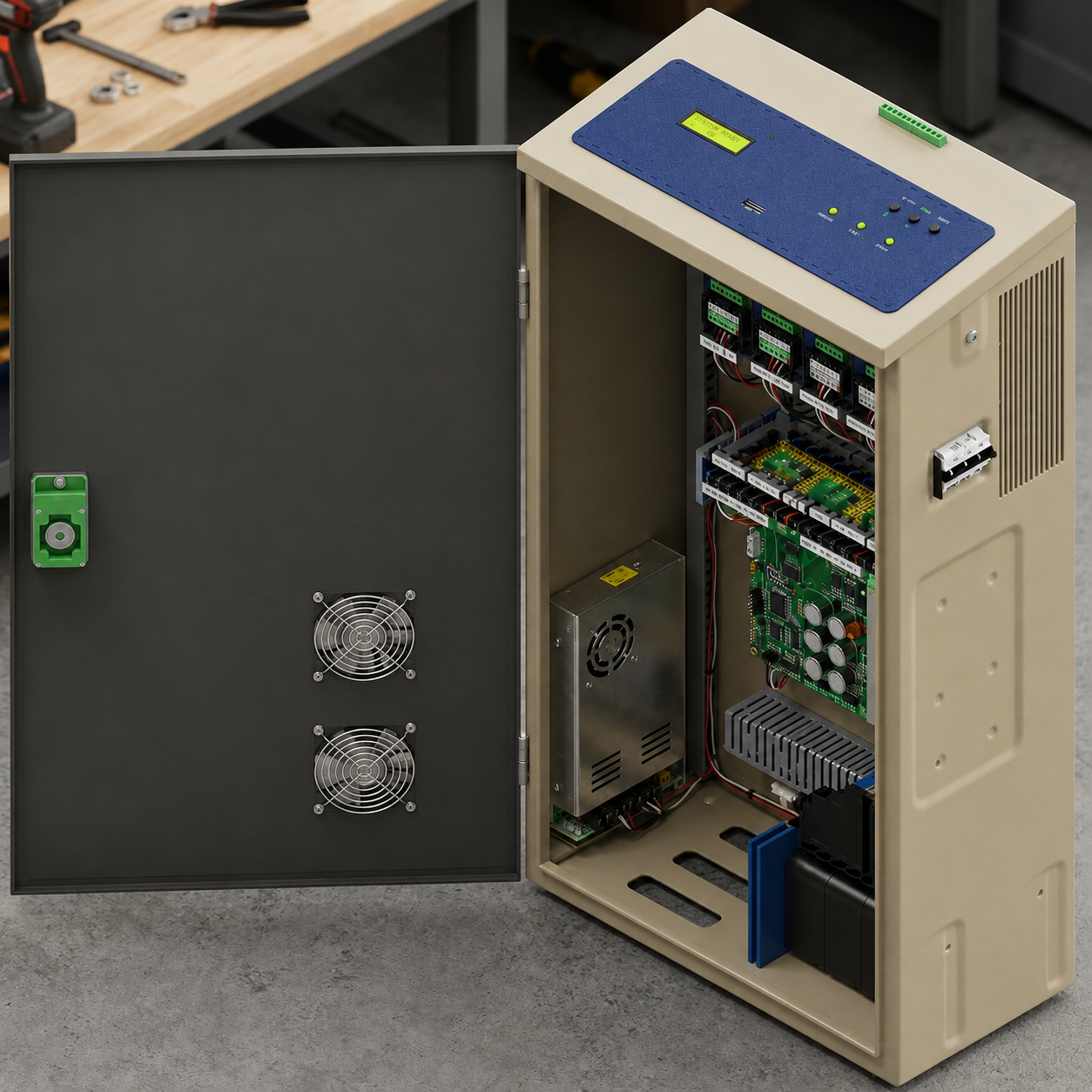
Every module below is designed in-house — mechanism, electronics, firmware and enclosure. The
images are our own CAD and prototype hardware, and each card carries its honest development stage.
01 — Weft insertion
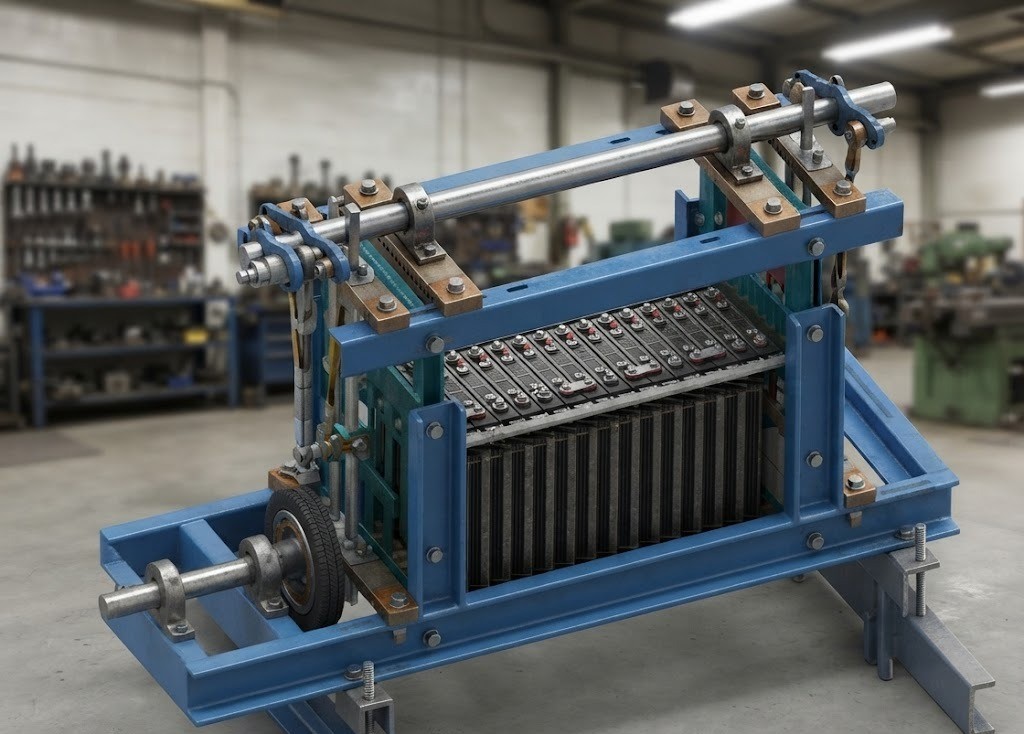
Linear Cam Rapier Drive
A linear cam either side of the loom drives a rapier gearbox off the existing slay oscillation.
The shuttle picking mechanism comes out entirely — and with it the pirn winding process, the
noise, and the safety risk of a shuttle in flight.
Patent pendingPrototype on test rig
02 — Selvedge
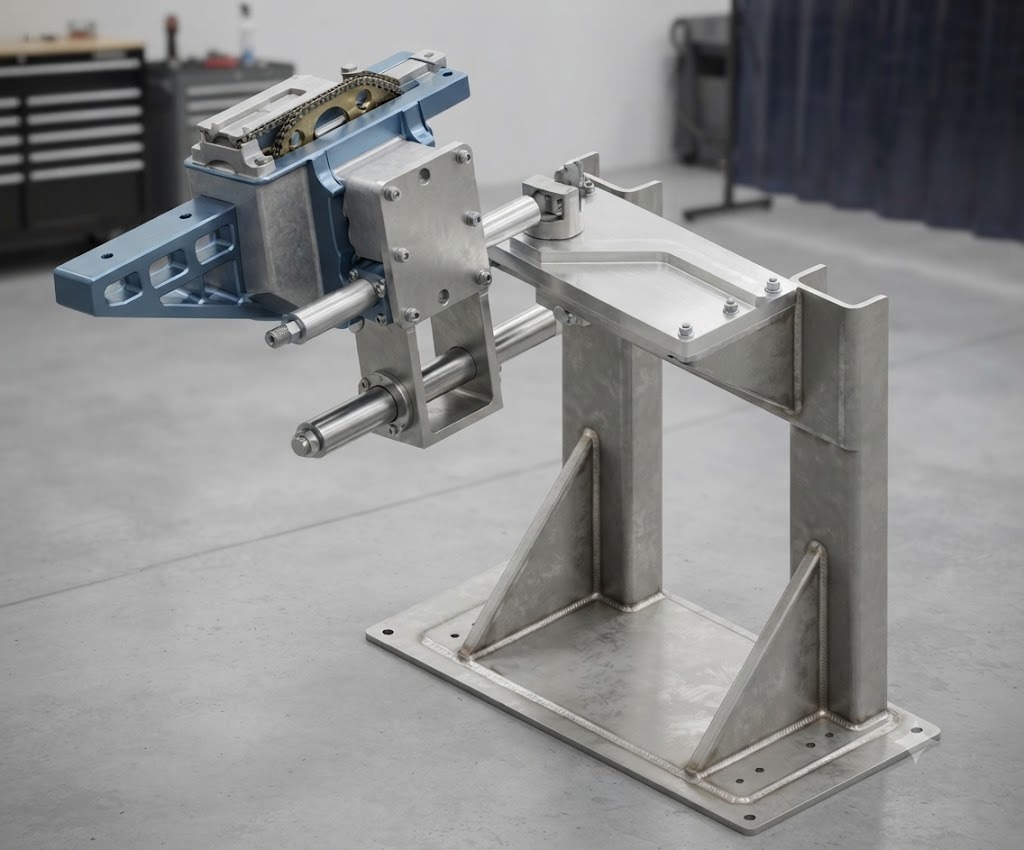
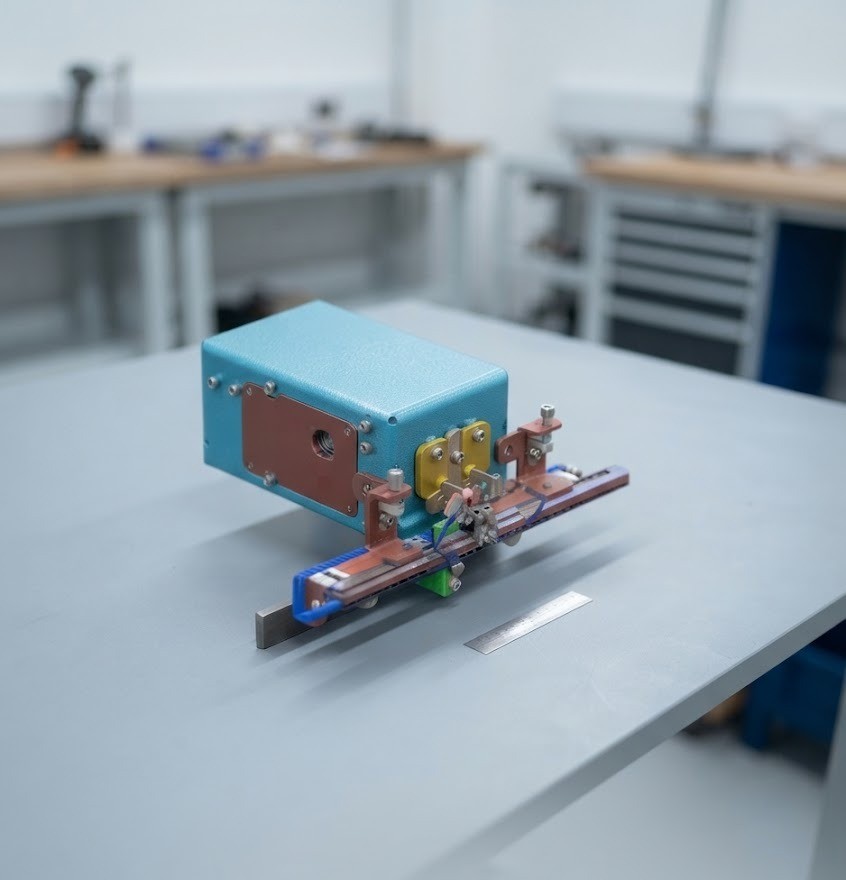
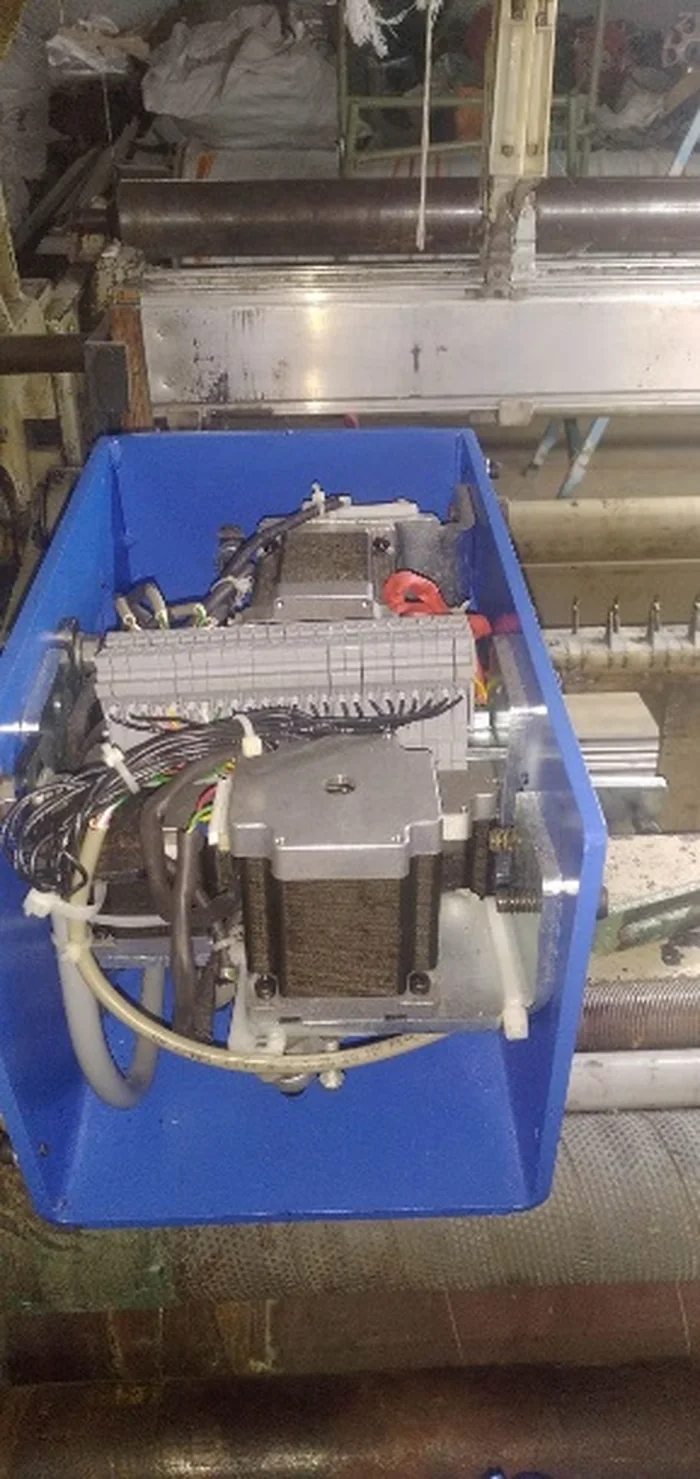
Electronic Tuck-In Device
Servo-driven edge folding that closes the selvedge, so cloth off a shuttle-less machine sells
into the same market as shuttle-loom cloth. Settings come from a mobile app, not a spanner.
This is our furthest-developed module — built, fitted to a loom and weaving.
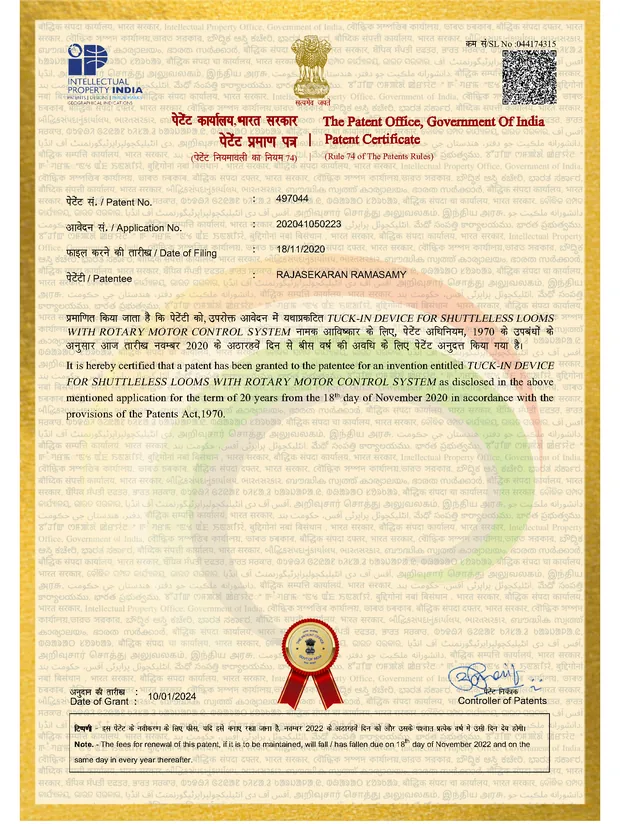
Patent 497044 — grantedTrialled on a loom · DFM in progress
03 — Shedding
Hybrid Electronic Shed Forming
An electronic shed-forming frame with minimal alignment and opening setup, driven from the same
app. Designed to hold the intricate designs a mechanical dobby cannot, and to change pattern
without stripping the loom.
Patent pendingDetailed design
04 — Warp tension
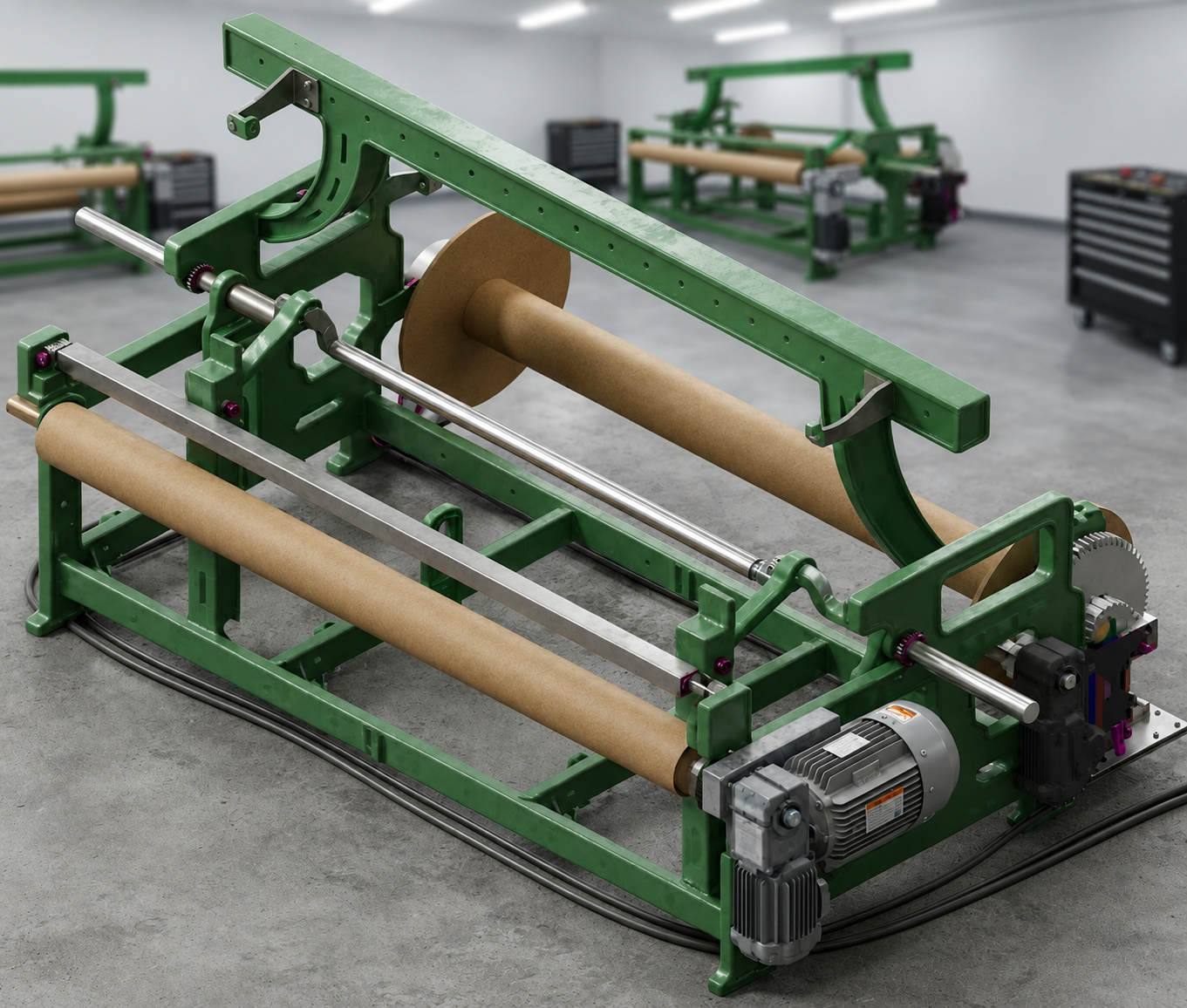
Universal Electronic Let-Off
A servo drive, universal beam holder and load cell holding warp tension constant from a full
beam to an empty one. Critically, it is designed to accept the weaver's existing warp beam
unmodified — no beam alteration, no new stock.
Patent pendingDetailed design
05 — Fabric take-up
Universal Electronic Take-Up
Replaces the 5- and 7-wheel take-up motion. Pick density is typed into a phone instead of set
with a gear change, and cramming action is configurable per design — so a shed can switch
construction between orders in minutes.
Patent pendingDetailed design
06 — Control
IIoT Smart Loom Controller
Custom industrial electronics with a touch HMI, production logging and remote monitoring. A shed
owner stops guessing at efficiency and starts reading it, loom by loom, from a phone.
Patent pendingHardware on the bench
Where we actually are
Development status, stated plainly.
RETRO RAPIER™ is a product under development, not a catalogue item. One module is patented and has
run on a working loom. The others are at design or prototype stage, and design-for-manufacture is
moving in parallel. We would rather tell you that than have you find out later.
Subsystem
IP status
Engineering stage
Progress
Electronic Tuck-In Device
Patent 497044 granted
Prototype trialled on a working loom · DFM in progress
IIoT Smart Loom Controller
Application filed
Hardware prototype in bench testing
Linear Cam Rapier Drive
Application filed
Design complete · prototype on test rig
Universal Electronic Let-Off
Application filed
Detailed design · prototype build next
Universal Electronic Take-Up
Application filed
Detailed design · prototype build next
Hybrid Electronic Shed Forming
Application filed
Detailed design
Integrated machine (all six)
—
System integration not yet started
Now
R&D and DFM
Prototype iteration, tolerance and material work, supplier qualification and cost-down on the tuck-in device.
+12 months
Manufacturing ready
Production drawings, jigs and fixtures, a pilot batch, and field trials with weaving partners.
+2 years
Series production
Own assembly line, quality systems, and a spare-parts chain a weaver can actually reach.
+5 years
Across the clusters
Dealer and service network through Tamil Nadu and the other major weaving states.
From the workshop
What the work looks like right now.
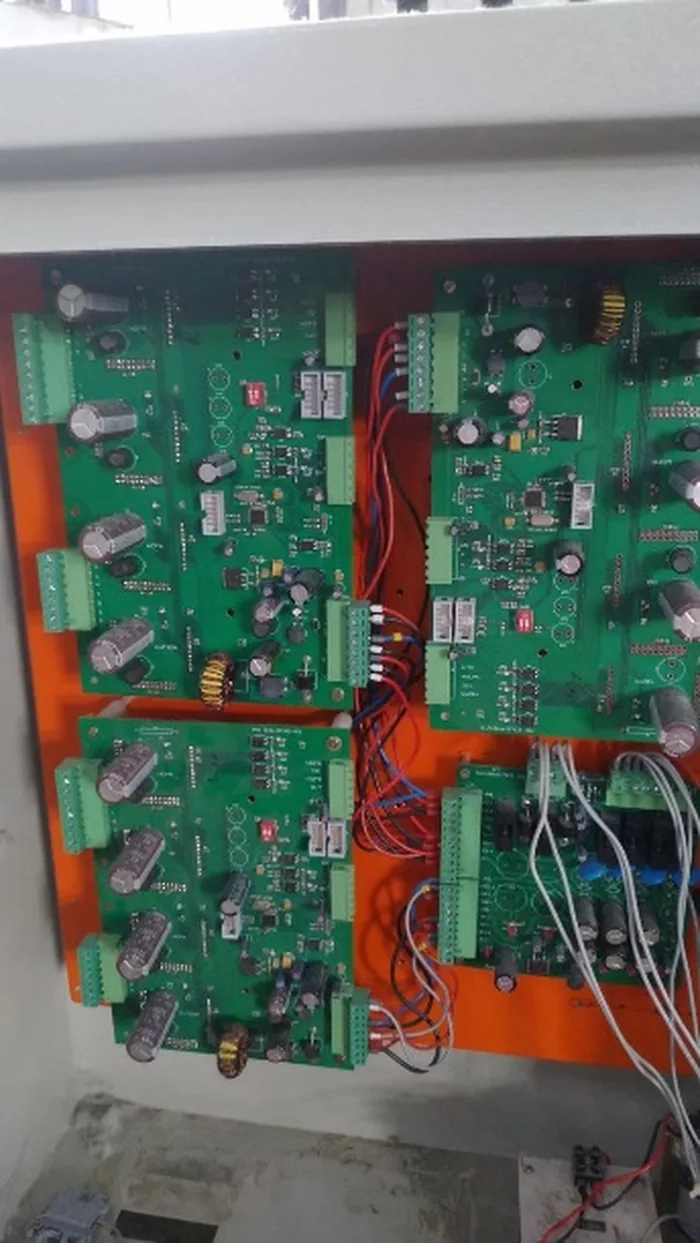
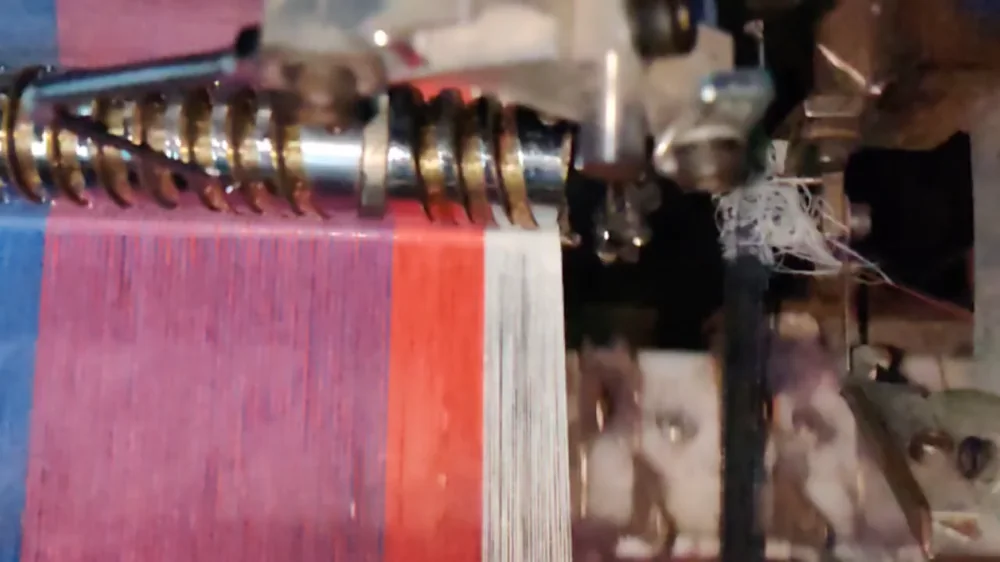
Not renders. Real hardware from our own bench, and from the looms where the tuck-in device has
been trialled.
Machined tuck-in device prototype, ready for fittingMotor-driver and control boards we designed, under bench testTrial run on a working loom — coloured warp, tuck-in engagedThe weaving shed where our field trials happen
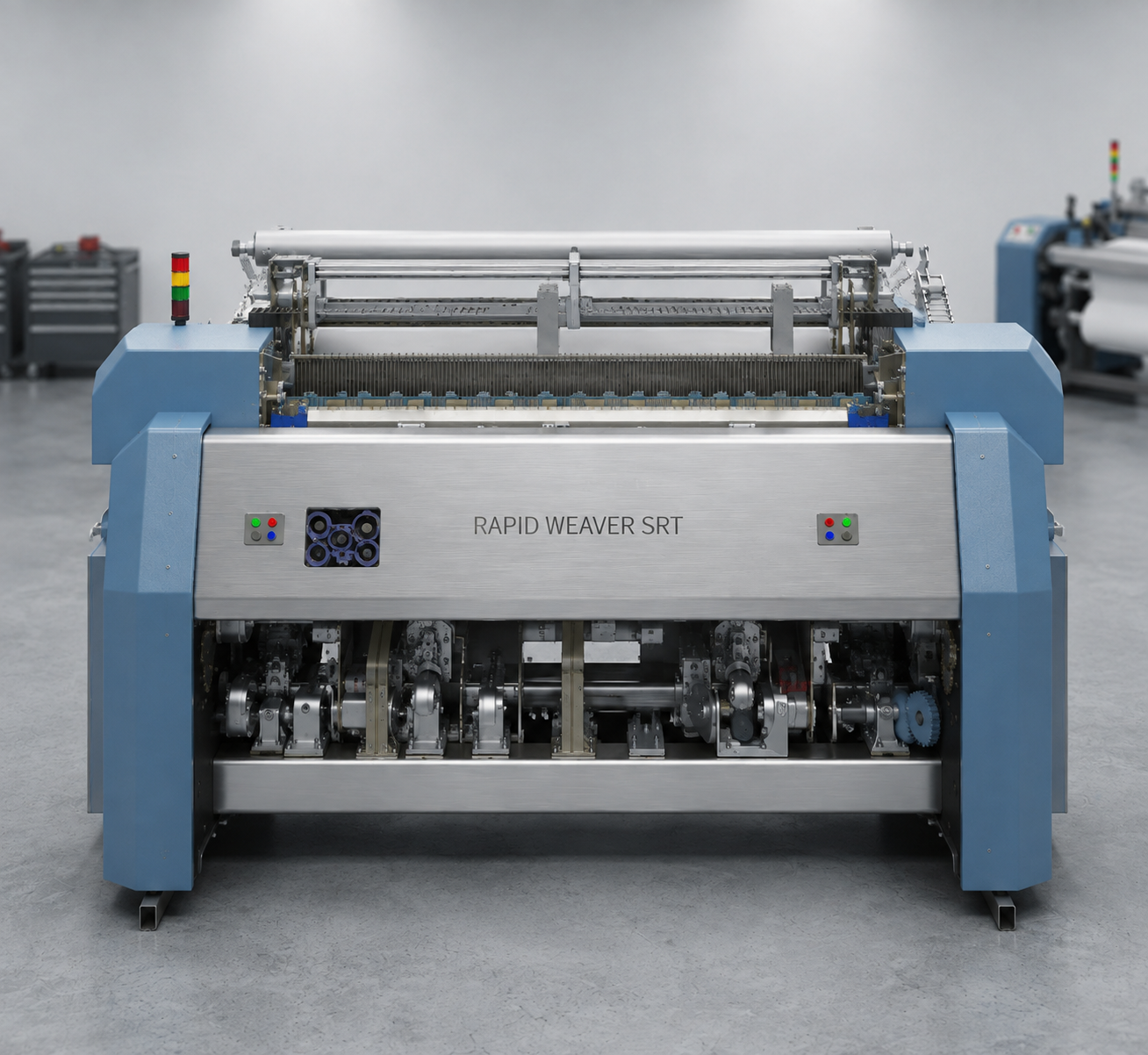
The machine we are building towards
Every module, on one reused frame.
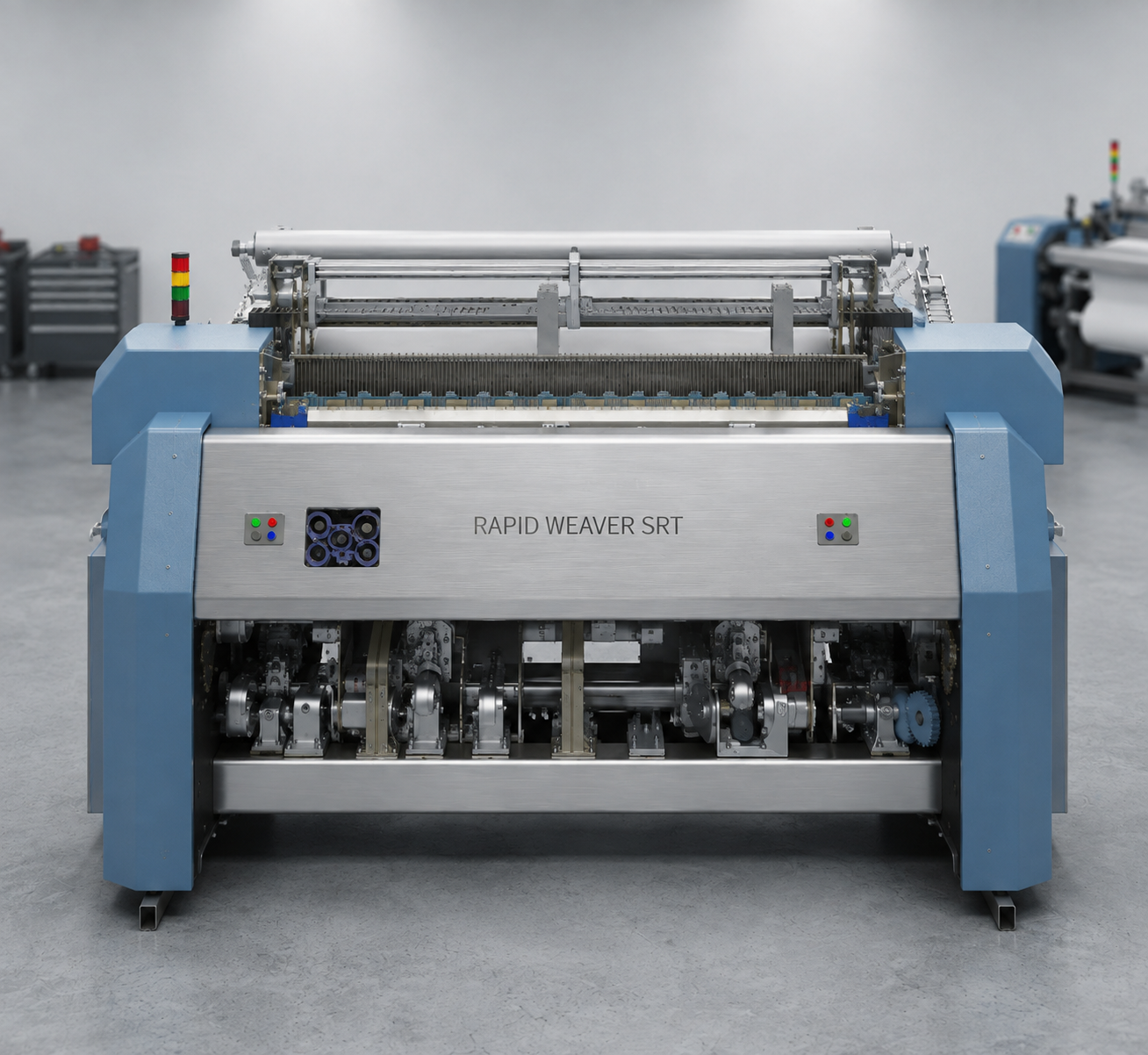
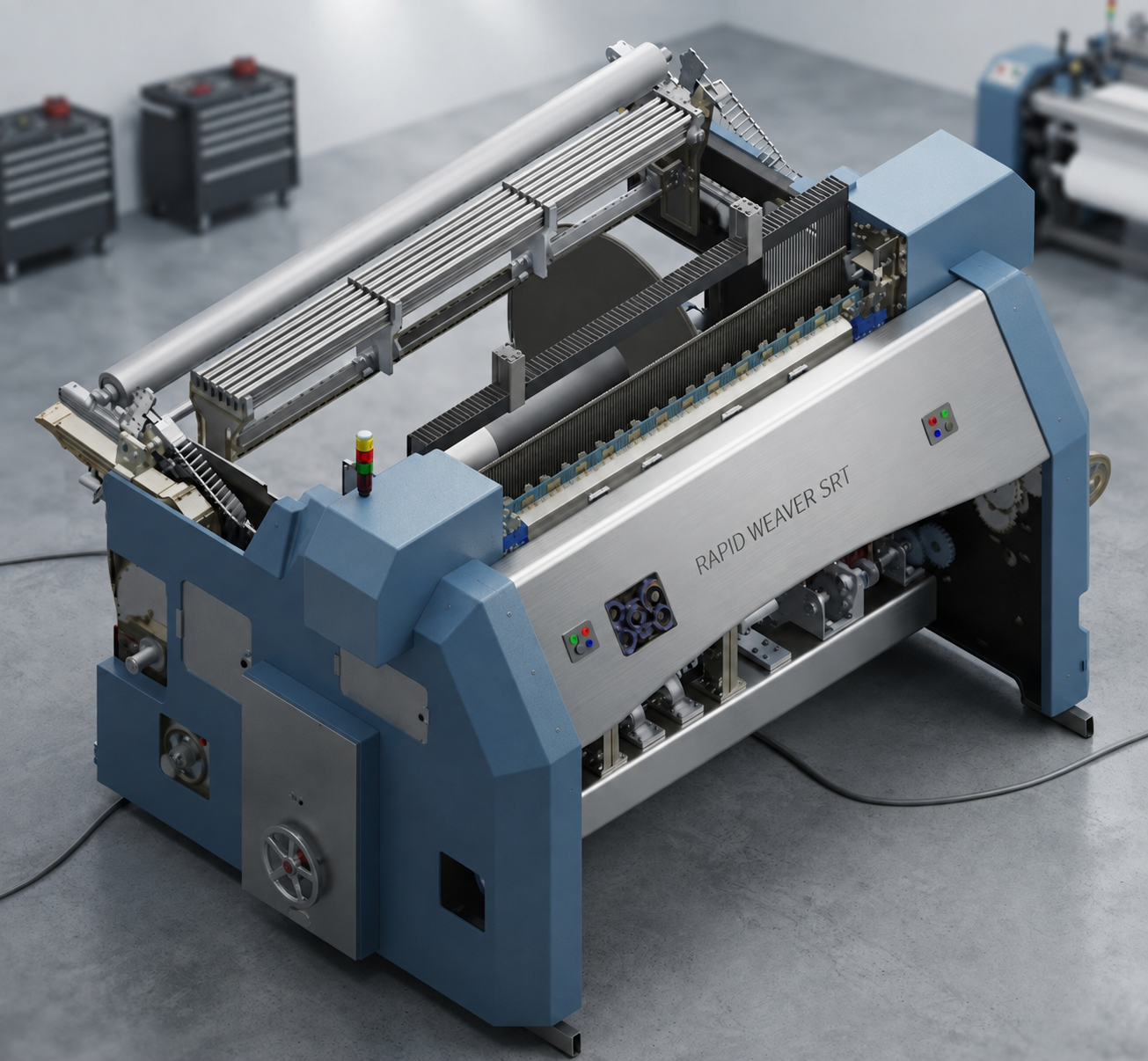
This is the target: six subsystems fitted to a frame that has already worked for thirty years,
coordinated by one controller. It exists today as a complete CAD assembly. The modules inside it
are at the stages listed above.
One controller coordinating rapier, let-off, take-up, shedding and tuck-in.
Set from a phone, not from a gear change or a spanner.
Designed entirely in-house — mechanism, PCB, firmware, enclosure, commissioning.
Serviced from Tiruppur, by the people who designed it.
Why it matters
What changes when a loom is modernised.
01
Modernisation a family shed can fund
Reusing the cast frame removes the single most expensive item in loom manufacturing — the reason the price gap is so wide.
02
Fabric that competes on export terms
Closed-loop warp tension, digital pick density and a closed selvedge hold construction steady across the full beam.
03
A shed people still want to work in
No flying shuttle. Noise drops, the accident risk drops, and the job stops driving skilled weavers away.
04
Thirty more years from existing iron
Reusing the frame avoids re-casting the heaviest component of the machine — circular manufacturing, not a slogan.
Our story
From a repair bench in Udumalpet to a granted patent.
Retro Wovens did not start in a lab. It started with a teenager taking apart broken electronics in
a loom town, and it has been the same person's problem ever since.
2006
The repair shop
Finishes school in Udumalpet and joins an electronics repair shop as a teenager.
2010 – 2013
Textile technology, then electronics
Diploma and B.Tech in Textile Technology. Mechanical design and embedded electronics learned largely by self-study, alongside.
2013 – 2023
A decade building machines
Special-purpose machines and control systems for Coimbatore industry, including work for Robert Bosch.
2018
First conversion on a live loom
A rapier conversion with an electronic tuck-in device is fitted to a working loom — the origin of everything on this page.
2024 – 2026
Retro Wovens
Company incorporated in January 2024 with Mathumathi Ramasamy. Indian Patent No. 497044 granted. DPIIT recognition, MSME registration and grant-supported R&D follow.
About the company
An Indian textile machinery R&D company.
Retro Wovens Private Limited was incorporated on 12 January 2024 in Tamil Nadu. We design our own
weaving machinery and electronic loom control products under the RETRO RAPIER™ brand. Mechanical
design, PCB design, embedded firmware, prototype assembly and testing all happen in-house.
We are a product company at development stage. Every subsystem was designed here, and all six are
the subject of our own patent filings — one granted, five pending. Our next milestone is
manufacturing readiness, not a longer catalogue.
R. Rajasekaran
Founder & Managing Director
B.Tech in Textile Technology, with over a decade in weaving machinery R&D. Works across
mechanical design, mixed-signal and industrial embedded hardware, motor control and power
electronics. Inventor on Indian Patent No. 497044.
Legal name
Retro Wovens Private Limited
CIN
U13139TZ2024PTC030375
Incorporated
12 January 2024
Company type
Private Limited Company
Activity
Textile machinery design & development
Stage
R&D · pre-production
Recognitions
DPIIT Startup · Udyam MSME
Location
Tiruppur, Tamil Nadu, India
Indian Patent No. 497044 — Tuck-In Device for Shuttle-less Looms with Rotary Motor Control System
Get in touch
We are looking for looms to prove this on.
If you run a weaving shed and would host a field trial, we want to hear from you. We also answer
technical questions from mills, machining suppliers and investors. Tell us your loom make, reed
width and the fabric you run.